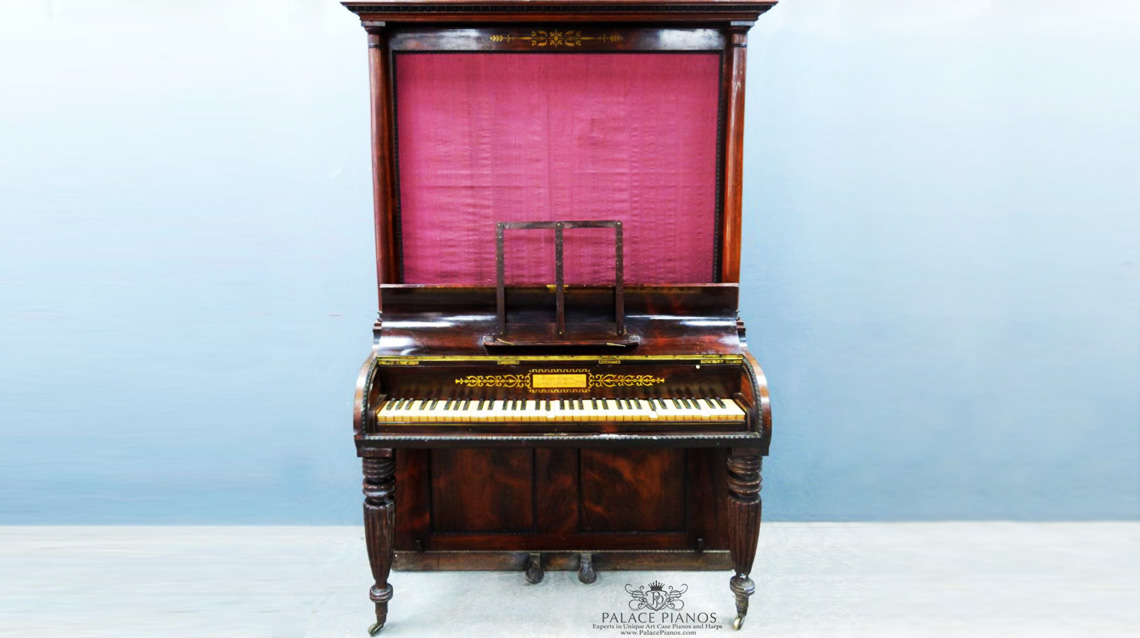
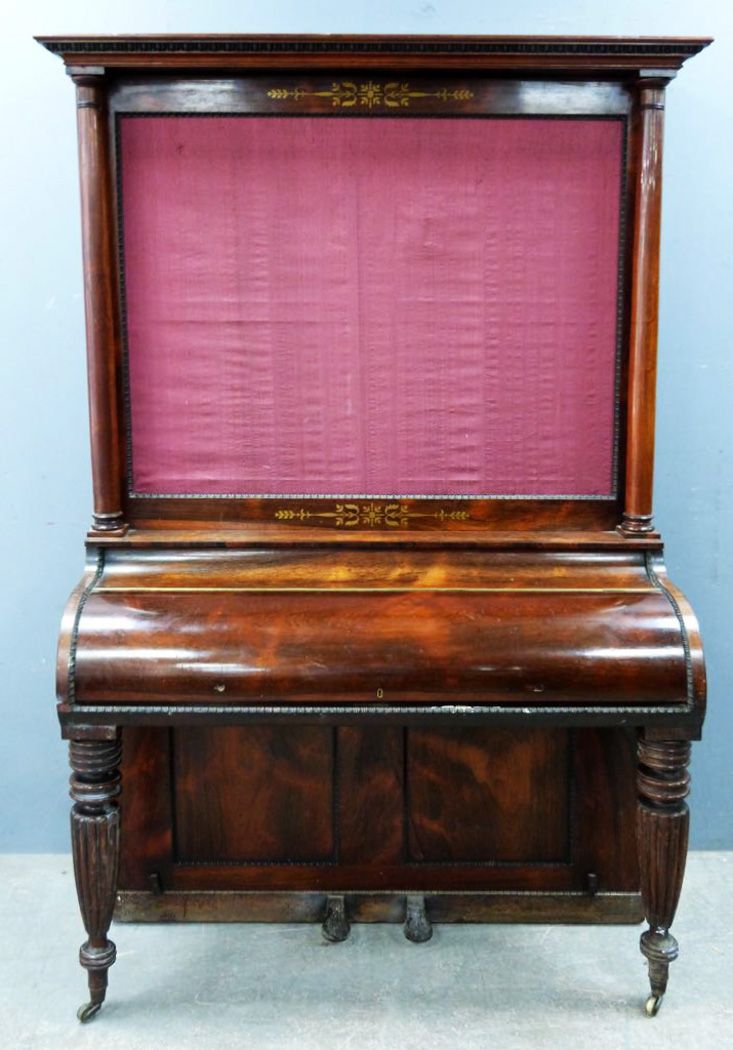
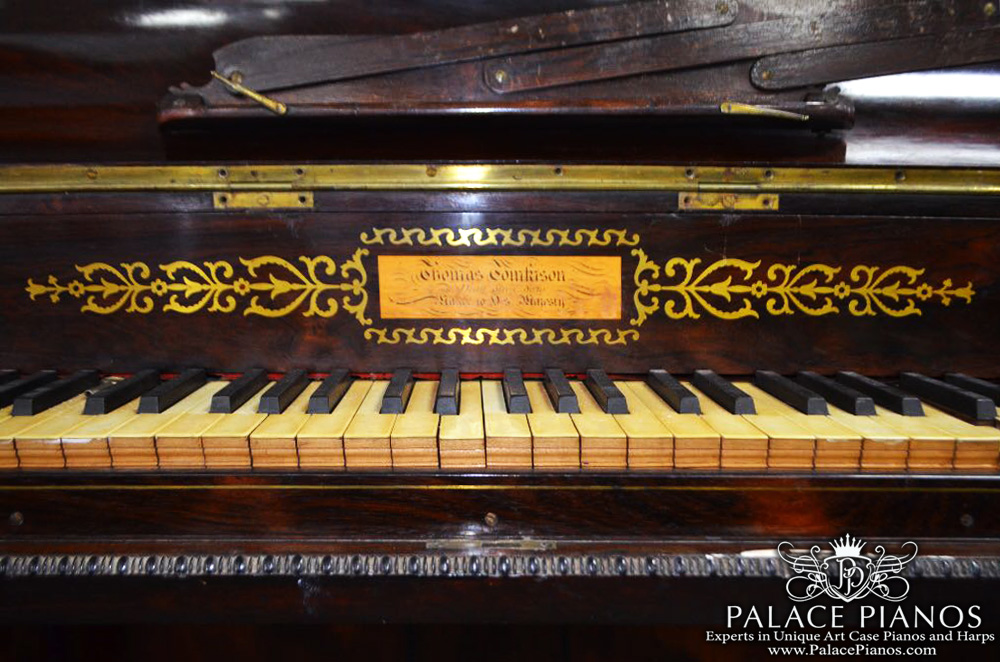
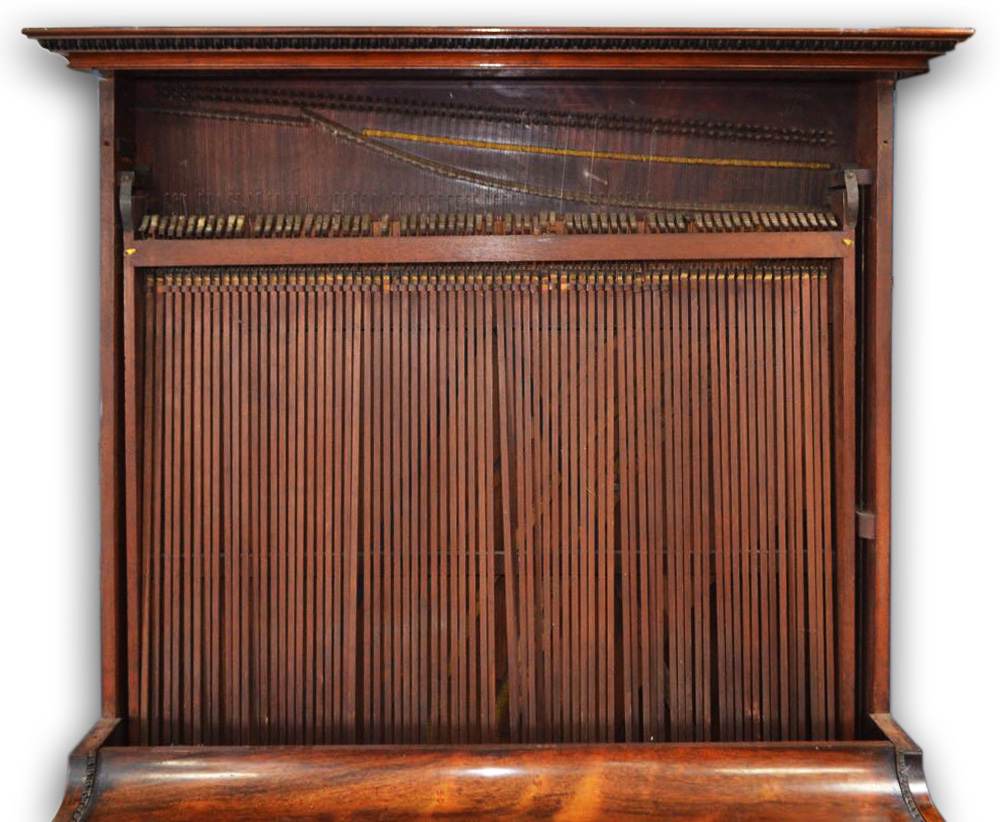
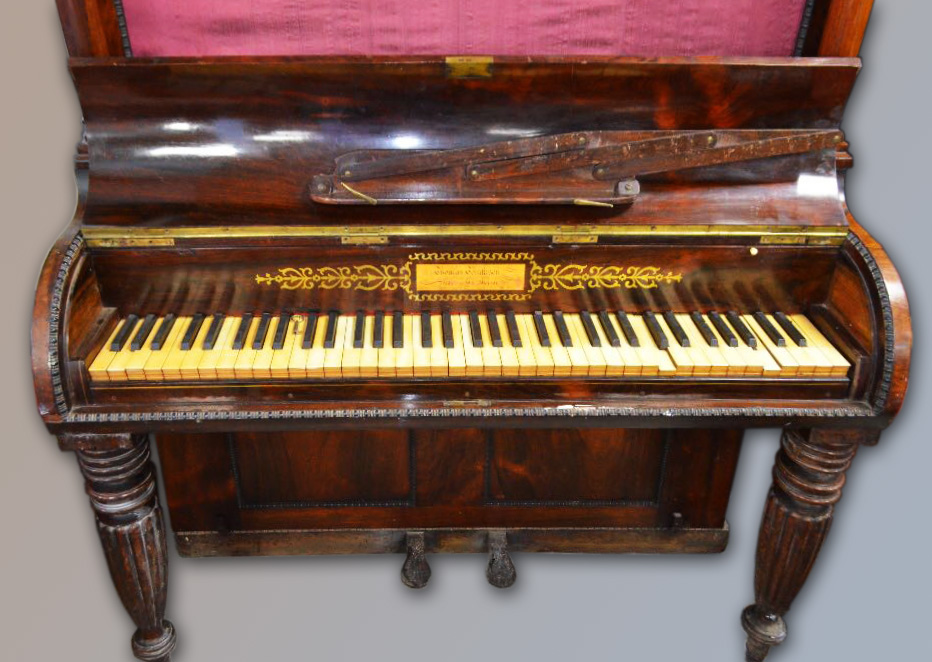
توماس تمکیسن کابینت پیانوفورته شماره سریال ۷۵۲
بدنه از چوب قرمز ماهون (ماهوگانی) و منبت کاری شده با فلز برنج میباشد . این کابینت پیانوفورته خاص در یک سالن موسیقی با سقف های بلند پیدا شده که با شال های شیک ابریشم یا دیگر پارچه های تزئینی به منظور جلب مهمانانی که برای لذت بردن از صدای پیانو به استقبالش آمده اند، ساخته شده است…
A Regency period Cabinet piano standing 185 cm tall, made by Thomas Tomkison 55/77 Dean Street Soho London. Case of Mahogany and inlaid brass.Serial number 752 Circa 1825, this tall Cabinet piano shows itself with musical education mixed with the importance of the social times of England under the Regency Era. This Pianoforte would have been found in a music salon with high ceilings, and probably draped with wonderful shawls of silk or other fabrics to entice the guests that were welcomed for a tea or a piano recital. For one to show off their financial status, was a normal in this particular era of London Fashion.
Style, the way things look in a particular period, depends upon interlocking social and artistic factors. . The desire of the new rich to be seen on equal terms with the landowning aristocracy, or to be better than them, the desire of the rapidly developing industrial and business community to find a style that suited them, and the desire of an increasingly powerful middle class to tell the world about their new status – all these aspirations made it impossible for one style to meet everyone’s demands. The Regency is noted for its elegance and achievements in the fine arts and architecture. This era encompassed a time of great social, political, and economic change. War was waged with Napoleon and on other fronts, affecting commerce both at home and internationally as well as politics. Despite the bloodshed and warfare the Regency was also a period of great refinement and cultural achievement, shaping and altering the societal structure of Britain as a whole.
Each group tended to choose a style demonstrating their identity and their worth. For the business class, for example, the worthy and patriotic status of classical design gave authority and weight to their position of trust. This type of furniture would not have been found in average middle-class homes or even those of many wealthy people. However, the new designs pioneered in these pieces were soon simplified and commercialized by manufacturers. The design of all furniture, even the very cheapest, was to follow the lead.
One can imagine this piano within this period of elegance quite well.